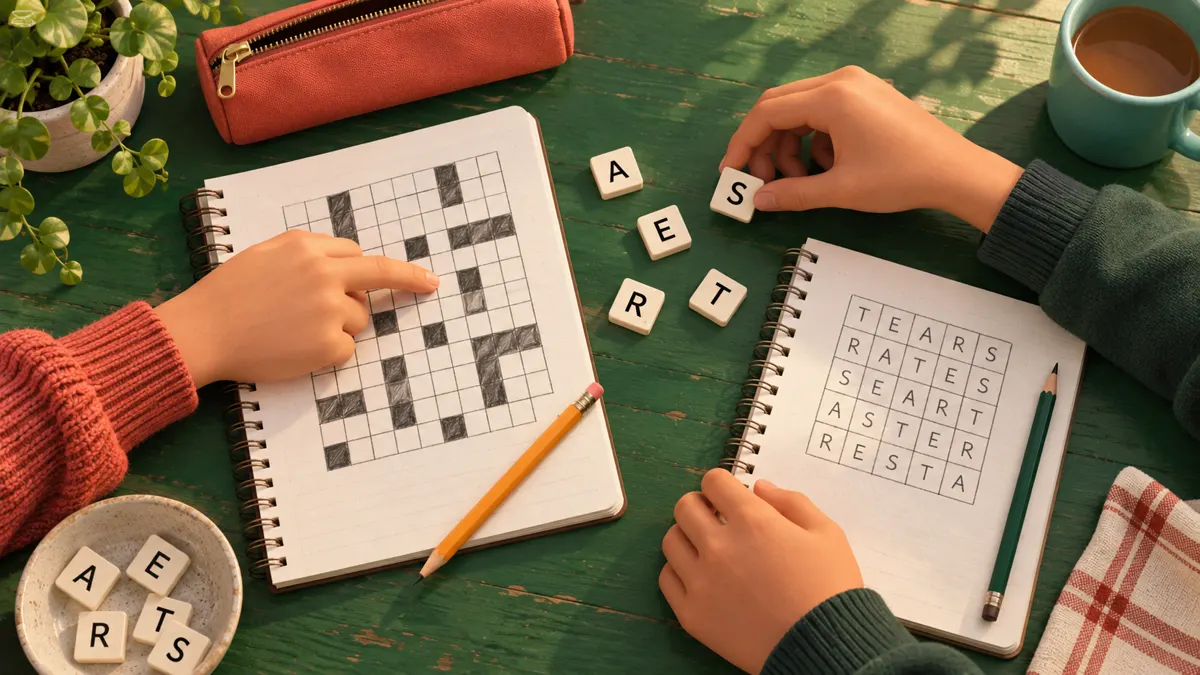
The imposter drawing game is a secret-role game played on one shared sheet of paper. Everyone except one player knows the subject. Each person adds a line to the picture, then the group votes for the artist who was drawing without knowing the answer.
You do not need to draw well. You need to add something that belongs in the picture without making the subject obvious too early. Below is a complete paper-and-pen house ruleset, so you can start without downloading anything. Find the Imposter currently offers a word game, not an in-app drawing canvas.
Use the selectable drawing round
Online: You can also select this round in the Online settings, Create Room, or the host’s lobby settings. Each player keeps their role on their own device. Use paper together, or arrange an external shared drawing board remotely; the app has no built-in canvas. The drawing preset does not hide or lock any category: add or remove any available category in Categories.
Open Find the Imposter, choose Pass & Play, then open Settings → Drawing with paper or a tablet. The selected card stays highlighted and shows the rules. Add your players and reveal each role privately on the phone.
The game selects drawable categories automatically: cartoons, superheroes and villains, apps and software, jobs, animals, nature, fruit and vegetables, beach objects, clothing, food, household items, transport, brands, tools, musical instruments, landmarks, space and sports equipment, where available in your language. Draw logos or recognizable objects for apps and brands. Trees are in Nature. Open Categories to narrow the selection for your group; younger players may prefer Animals and Fruit & Vegetables.
Imposter Hint is directly below Categories and starts on. It shows the category, not the secret word. Turn it off for a harder round. Keep the phone for private roles and draw on paper or a separate tablet. The app does not supply a shared canvas.
Take turns adding a stroke without talking or writing letters or numbers. Discuss the finished picture, then use the app's voting button. Start with one imposter: catching only the imposter wins for the crew; accusing an innocent player or leaving the imposter uncaught wins for the imposter. The separate paper rules below offer a different tie rule and optional final guess; those house rules are not applied automatically by the app.
Start with this simple setup
| What to prepare | First-game recommendation |
|---|---|
| Group | 4–8 people around one table |
| Materials | One sheet, a pen per player, folded role slips |
| Roles | One imposter; everyone else gets the same subject |
| Drawing | Two turns each, one continuous stroke per turn |
| Discussion | About one minute after the last stroke |
| Finish | Vote together, then reveal the roles |
The player range is a recommendation for this paper variation, not an app limit. With three players, there is very little evidence before voting. Above eight, split into tables so nobody waits through a long queue.
Choose a non-playing host for the first round. They write the subject on all but one slip and “imposter” on the remaining slip, fold them identically and shuffle them. A host who knows the answer should not take a hidden role. Rotate the hosting job between rounds.
How to play, step by step
- Check your role privately. Read your slip without showing a neighbor. Put it face down.
- Choose a starting seat. Move that starting seat one place clockwise next round; the same person should not always have the difficult opening turn.
- Draw one stroke. Keep the pen on the page from the start to the end of your contribution. A curve, loop or zigzag is allowed. A dot counts as your turn too.
- Pass the picture. Continue clockwise until everyone has drawn twice. Do not label objects, write letters or erase another person's work.
- Discuss the lines. Each player gets a short chance to explain their contribution without saying the subject. Ask about a specific mark rather than somebody's confidence.
- Vote at the same time. Count down and point, or write a name secretly. The player with the most votes reveals their role.
For this beginner ruleset, the group wins if it identifies the imposter; otherwise the imposter wins. If two people tie, give each one sentence to explain, then vote again between those two. If it remains tied, call the round a draw and start a new picture. Agree on this before dealing.
A sample round: the secret is “tent”
Imagine four artists and a host. Three slips say tent; the fourth says imposter. The first player draws an angled roof line. That could still belong to a house, mountain or tent, so it leaves room for guessing.
The next player adds a curved ground line. The imposter adds a square window, thinking it may be a house. The final player adds a short rope extending away from the roof. On the second lap, someone marks a peg and another outlines the entrance.
The square window is worth discussing, but it is not proof. Tents can have windows. Ask the artist how their mark connects to the others. If the explanation fits, consider another suspect. Revealing the slips is the only way to know who lacked the subject.
This is an illustrative round, not a claimed playtest. Your picture will look different, and an awkward drawing can come from any role.
30 prompts you can actually draw
Pick one row that suits the group. A host should choose privately: displaying the whole list to the imposter makes guessing easier.
| Familiar objects | Animals and nature | A little more detail |
|---|---|---|
| Tent | Snail | Ferris wheel |
| Teapot | Turtle | Tree house |
| Kite | Jellyfish | Drawbridge |
| Crown | Cactus | Hot-air balloon |
| Suitcase | Penguin | Lighthouse |
| Watering can | Mushroom | Roller skate |
| Candle | Crab | Windmill |
| Mitten | Palm tree | Treasure chest |
| Ladder | Whale | Snow globe |
| Alarm clock | Butterfly | Satellite |
Start with concrete subjects that everyone recognizes. “Justice” may be interesting for an art class, but it creates a vocabulary and interpretation test before anyone can bluff. A subject such as “teapot” has several drawable features without requiring one perfect outline.
Keep the drawing clues fair
Leave space for other artists. A huge first stroke makes the rest of the round awkward. Imagine the page divided into quarters and begin small.
Do not punish artistic ability. A shaky line, a pause or a laugh does not identify the imposter. Compare what the mark could represent with what the artist says it represents.
Avoid accidental hints. Naming a feature, announcing “that's wrong,” or pointing to the correct place can tell the imposter more than the drawing does. Save explanations until discussion. Ordinary laughter is fine; nobody needs to police every reaction.
Choose accessible tools. Thick pens and a large sheet can help everyone see. If a continuous stroke is uncomfortable, agree that one small shape counts as a turn for every player. Use that rule consistently rather than changing it after an accusation.
Optional variations after the first round
- Final guess: before dealing, agree that a caught imposter may make one guess at the subject to steal the win. This changes the beginner win rule above; it is optional, not universal.
- One lap: each player draws once. This is quicker but leaves less evidence, so save it for a group familiar with the format.
- Two tables: play separate pictures, then show both at the end. Do not expose one table's secret to the other during play.
Drawing mode or the word game?
Choose paper drawing when everybody is together and wants a quiet creative round. Choose the free word game when you want private role reveals and voting on devices. The word generator provides sample words; it does not secretly assign drawing roles or supply a shared canvas.
For more subjects, use our imposter word list. With a bigger party, see the large-group setup guide. Teachers can start with the classroom guide and choose familiar vocabulary.
Questions before you start
Can we play the drawing imposter game online?
This guide describes paper play. Remote drawing requires a separate shared drawing tool and a way to send roles privately. Our word game supports online rooms, but it does not currently provide that drawing surface.
Does the imposter get the category?
For the rules above, no: the imposter gets only the role. You can announce a broad category to everyone to make the first round easier. Never give different category information to different players accidentally.
Can two players play?
The hidden-role vote is not useful with only two people: the player who knows the subject can work out the other role immediately. Try a straightforward drawing-and-guessing challenge instead, or gather a larger group.
What if somebody draws an obvious answer immediately?
Finish the round, then ask for smaller opening contributions next time. If the subject was spoken aloud, redeal with a different one. The aim is a fun shared picture and a fair guess, not an argument about the perfect line.
Free drawing tools: phone, tablet or iPad
Paper and pens need no installation. On iPhone or iPad, use a blank Apple Notes drawing. On Android, Fossify Paint is a free drawing app that works offline; its store listing is labeled Beta. Download before the gathering. These are separate drawing tools; our selectable drawing round does not include a canvas.
How to use two devices
Use phone A only for private roles. Keep its screen away from the group and hide the word before handing it over. Use tablet or phone B only for the shared picture, with a blank canvas and one pen tool. Take turns adding a stroke; do not type the secret into the canvas title. Keep an adult in charge of app installation where appropriate. You can also use folded paper roles as described above.
Prefer a browser? Excalidraw offers a drawing board; open it beforehand and test offline use before relying on it. Draw.Chat is an optional shared online board and needs an internet connection. Neither tool enforces our turn or voting rules.