Critical thinking is the skill that schools claim to teach but rarely have explicit tools for. It appears in every curriculum document, "students will evaluate evidence, construct arguments, and draw reasoned conclusions", and then gets squeezed out by the pressure to cover content. The result is students who can recall information but struggle to evaluate it.
Middle school (ages 11–14) is the developmental window when abstract reasoning becomes possible. Students can begin holding multiple competing hypotheses simultaneously, evaluating evidence strength, and recognizing logical fallacies. Games that exercise these abilities during this window have been shown to accelerate reasoning development.
The games in this list require no preparation, no materials, and no specialist knowledge. They can run in 15–20 minute blocks, as warmups, transitions, or end-of-class rewards.
What "Critical Thinking" Actually Means in Practice
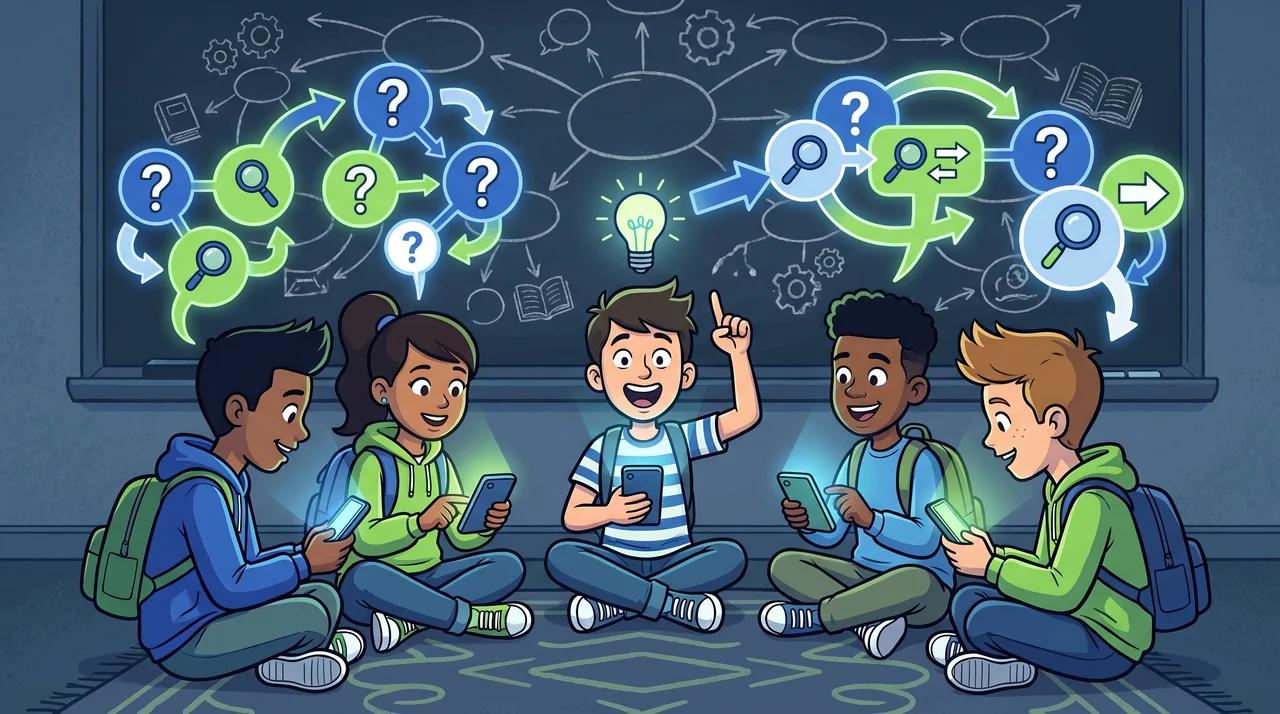
Before the list, it helps to be specific. Critical thinking involves:
- Hypothesis generation: Given incomplete information, what are the possible explanations?
- Evidence evaluation: Which hypothesis does this new information support or rule out?
- Logical inference: If X is true and Y is true, what must follow?
- Perspective-taking: What would someone with a different position believe, and why?
- Calibrated uncertainty: Being appropriately confident given the evidence, not overconfident or underconfident
These skills aren't abstract. They're exercised every time a student figures out who lied to them, spots a flaw in an argument, or tracks down why their reasoning led to a wrong conclusion.
1. Find The Imposter, Best for Inference and Deduction
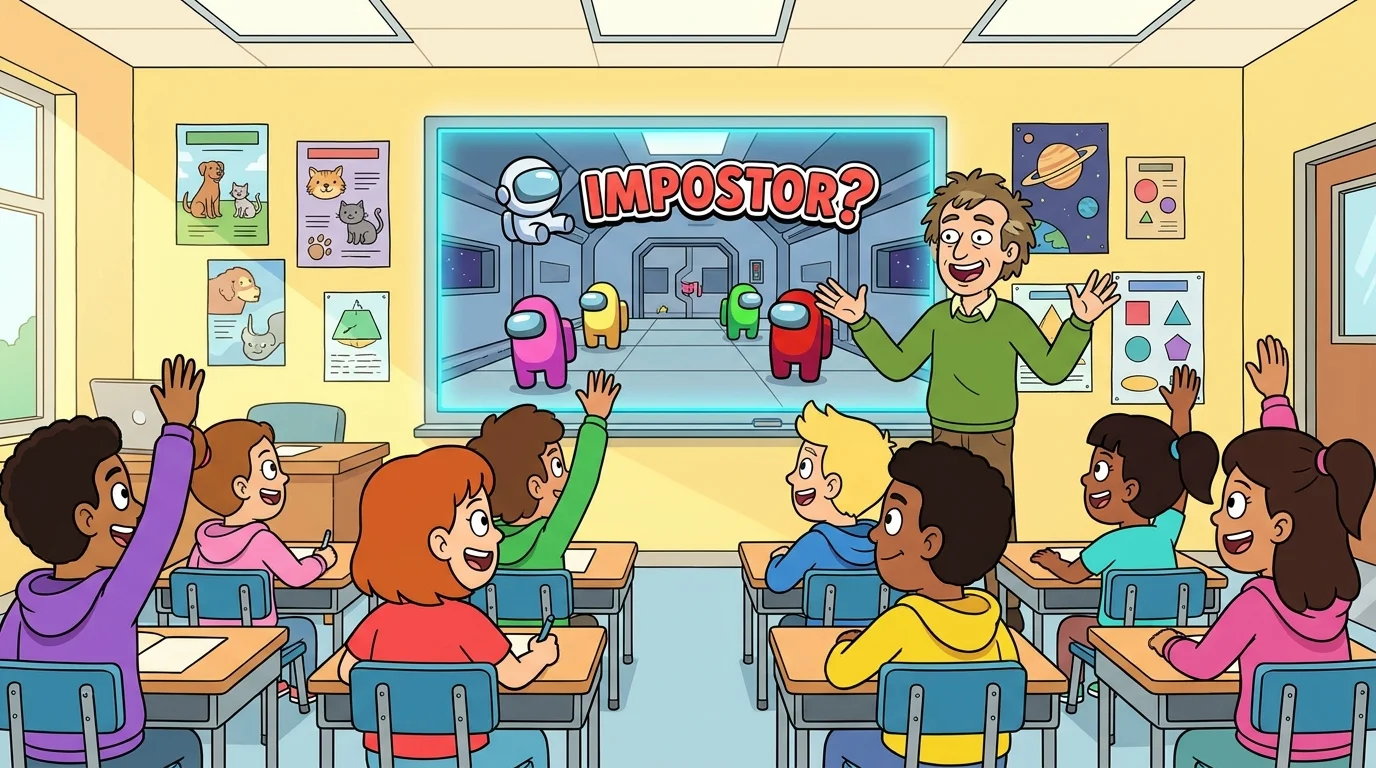
Find The Imposter is, at its core, a logical inference exercise disguised as a party game. Each player gives a clue about a shared secret word. One player (the imposter) doesn't know the word and must fake their clue.
Students exercise:
- Evidence accumulation: Each clue is a data point, what word could all these clues point to?
- Anomaly detection: Which clue is slightly off, too vague, too generic, not quite matching?
- Argument construction: "I think it's Jordan because their clue could fit anything, while everyone else gave specific associations"
- Updating beliefs: If the vote reveals the wrong person, what does that tell you about who gave which clues?
Middle school students take to this naturally because the social stakes (being voted out by your peers) create genuine motivation to reason carefully. Free, no download, works on any device. Create groups of 5–8 per device.
Time: 15–20 minutes | Grade: 6–9 | Prep: 0
2. Mystery Box Reasoning
Bring a bag or box with 5–10 objects that tell a story (a bus ticket, a coffee cup, a library card, a phone charger, a scarf). Students have 5 minutes to examine the objects, then must collectively build the most plausible story about who owns this bag and where they were going.
Groups present their reasoning, not just their conclusion, but the specific evidence chain ("the library card means they were a student or researcher; the coffee cup with lipstick suggests..."). Other groups challenge the reasoning.
Why it works: Forces explicit reasoning chains, not just intuitive conclusions. Students practice articulating why they believe something, not just what they believe.
3. Structured Controversy
Assign half the class to argue for position A on a debatable topic, the other half for position B. After 3 minutes, both sides switch and must argue the opposite position. Then the class drops the assigned positions and discusses what they actually believe.
The forced perspective-switch is the critical thinking exercise: students discover that the strongest arguments for the other side are more compelling than they expected, which builds epistemic humility, the foundation of genuine critical thinking.
Topics that work at middle school level: "Should homework be banned?" / "Is it ever okay to lie?" / "Does social media do more good or harm?"
4. Logic Puzzles (Verbal)
Classic logic puzzles, the "five houses" type, or Zebra puzzles, can be run verbally in class. Read the clues one at a time. Students track hypotheses together on the board. The teacher acts as facilitator, not solver.
The meta-lesson: systematic elimination is faster than random guessing. Students often intuit this for the first time when they see how quickly the puzzle resolves when you apply logic sequentially.
5. News Headline Analysis
Display 5 news headlines on the board. Students must: (a) identify what information would be needed to evaluate each claim, (b) identify which emotional or political framing is present, and (c) write the same story as a neutral one-sentence summary.
This is media literacy applied as a reasoning exercise, arguably the most practical critical thinking skill for 2026.
6. What Changed? Scenario Shifts
Present a scenario, then change one variable: "You planned to meet a friend at 3pm. They're not there at 3:15. What do you do? Now: their phone is dead and they live far away. Now: they've been late to your last three meetings. Now: you know there was a transit strike today."
Each variable change alters the most rational response. Students track how their reasoning updates as information changes, a direct exercise in calibrated belief updating.
The Takeaway
Critical thinking isn't a subject. It's a set of cognitive habits that form through repetition. Games are the best delivery mechanism because they create genuine motivation, students actually want to figure out the answer, which means they're genuinely exercising the skill rather than performing it for a grade.
Start with Find The Imposter as your no-prep option. Every round gives students 10–12 inference cycles, spotting the anomalous clue, building a case, updating when they're wrong. That's the same process as scientific reasoning, legal argumentation, and evidence-based decision making, just wrapped in a 15-minute game.
You can't teach critical thinking by telling students to think critically. You build it by creating situations where the right reasoning actually wins.