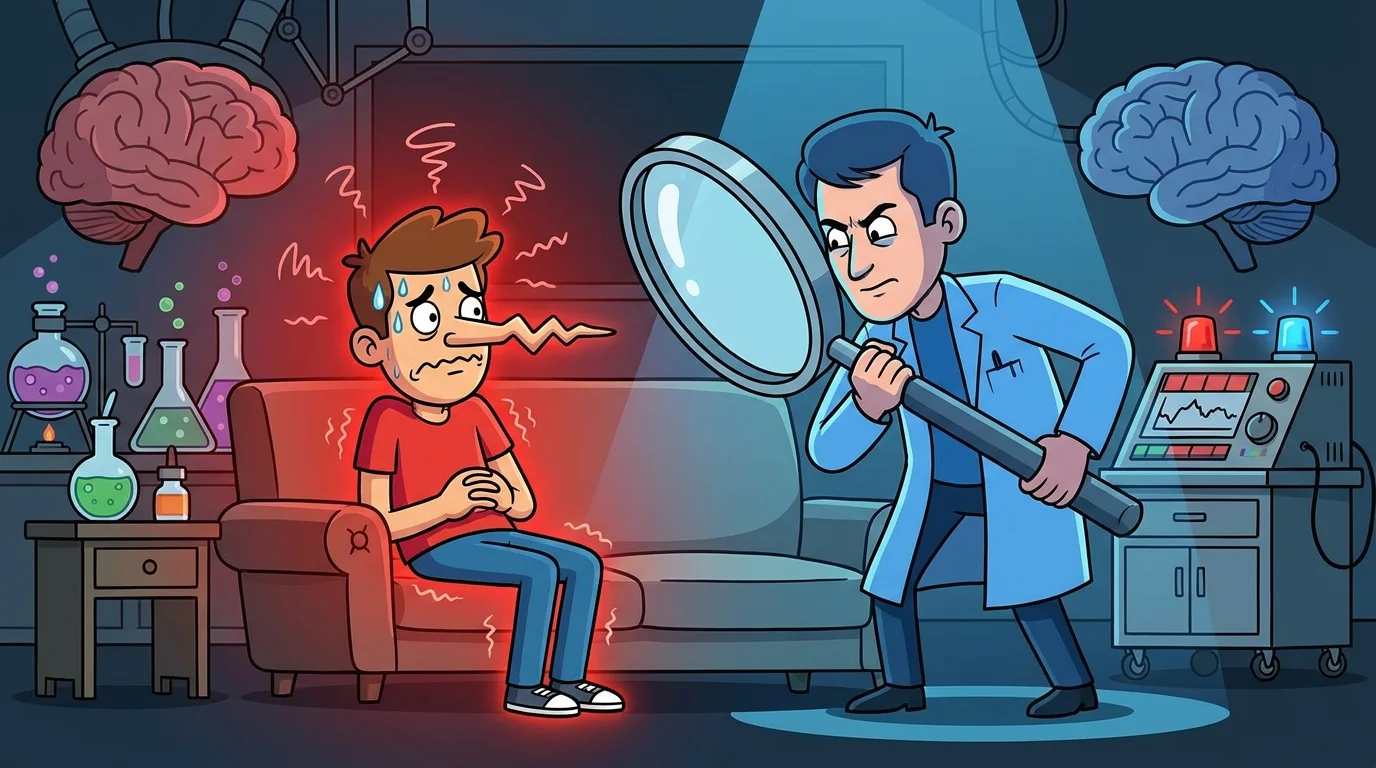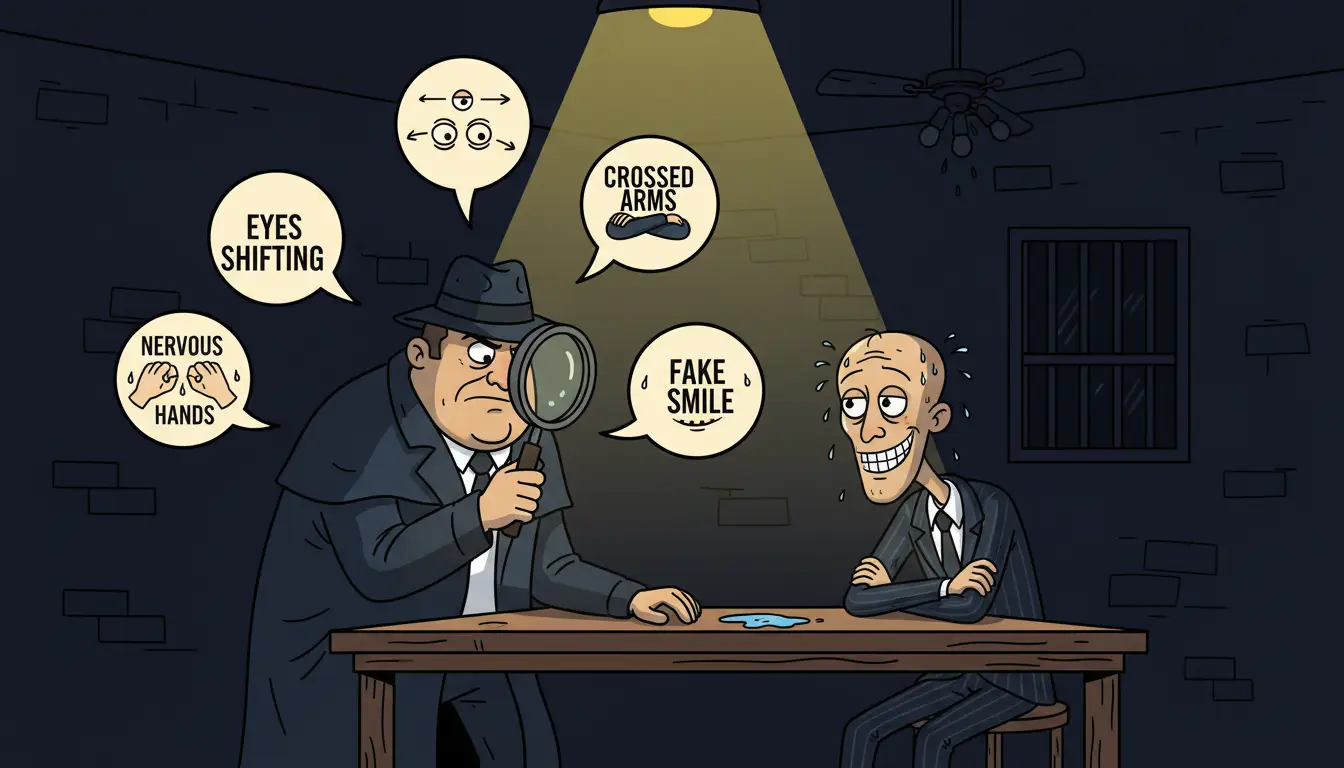
Professional interrogators don't catch liars by looking for a single smoking gun. They build a picture, a cluster of cues that, taken together, suggest someone's story doesn't hold up.
The same principle works in social deduction games. You don't catch the Imposter because they flinched once. You catch them because of how they spoke, when they hesitated, and what their face did when someone else gave the right clue.
Here are 9 body language cues used in real-world deception detection, and how each applies to spotting the Imposter at game night.
1. Baseline Deviation
The tell: Before spotting deception, establish a "normal" for each person. FBI interrogators spend the opening minutes of an interview asking simple, verifiable questions just to observe natural behavior.
In the game: Watch players during the first 1–2 rounds before voting. How do they normally speak? How fast, how confidently? The Imposter usually behaves differently during a round they're hiding something, slightly more deliberate, slightly more careful.
Deviation from a person's own baseline is more informative than any single gesture.
2. Microdelay Before Answering
The tell: Liars need slightly more time to construct a response. A half-second pause before answering a simple question is often revealing.
In the game: When it's the Imposter's turn to give a clue, they must listen to previous clues first to guess the word, then construct something plausible. Watch for the slight pause that betrays calculation where there should be immediate recall.
A genuine crewmate knows the word. They don't need to think about whether "citrus" is a safe clue.
3. Answer Inflation
The tell: Truthful people give appropriately-sized answers. Liars often over-explain, adding unnecessary detail to seem credible.
In the game: Impostors sometimes explain their clue unprompted: "I said 'cold' because of the texture, you know, the way it feels in your hand." That's more justification than a crewmate needs. They just know why it fits.
4. Gaze Aversion at the Wrong Moment
The tell: The myth that liars avoid eye contact is largely wrong. The real tell is gaze aversion at a specific moment: when a direct question is asked, or when someone else gives a particularly accurate clue.
In the game: Watch an Imposter when a crewmate gives a clue that perfectly describes the word. A genuine crewmate registers familiarity, the Imposter registers information. Their eyes often dart briefly to whoever gave the clue, processing it as new data.
5. Self-Soothing Gestures
The tell: Under stress, people unconsciously comfort themselves: touching the neck, rubbing hands, adjusting clothing. These gestures spike under pressure.
In the game: During voting, the Imposter knows they're in danger. Watch for increased self-touching right before votes are cast, neck touching, face touching, adjusting a sleeve. It's not definitive, but it's a reliable stress signal.
6. The Freeze Response
The tell: Fight, flight, or freeze. Involuntary stillness often precedes action under threat. An unnaturally still person, minimal blinking, rigid posture, is often suppressing their instinctive response.
In the game: A nervous Imposter may go very still when discussion gets close to exposing them. Contrast with crewmates, who tend to lean forward, gesture, and engage actively during accusation phases.
7. Verbal-Nonverbal Mismatch
The tell: When someone says "I have no idea who the Imposter is" while subtly nodding, there's a mismatch between what they're saying and what their body is doing.
In the game: Watch for players who claim certainty with an expression that doesn't match. Flat affect on a strong claim is a classic mismatch.
8. Deflection via Attack
The tell: Innocent people push back clearly and specifically when accused. Liars often deflect by attacking the accuser: "Why are you always targeting me?"
In the game: The Imposter, when accused, often redirects suspicion rather than defending with evidence. "What about [other player]? Their clue made no sense." Real crewmates defend themselves; Impostors redirect.
9. The Relief Tell
The tell: When a genuine threat passes, the liar relaxes visibly, a subtle exhale, a loosening of the jaw.
In the game: Watch the Imposter when voting shifts to another player. If they suddenly become chatty, agreeable, and enthusiastic when someone else is being accused, they're not participating in justice. They're relieved.
Putting It Together
FBI interrogators use the cluster method: no single cue means deception, but 4–5 cues together build a convincing case. If someone shows a baseline deviation, a microdelay on their clue, deflects when accused, and visibly relaxes when another player takes the heat, that's your Imposter.
The best deduction players aren't watching for one thing. They're reading the whole picture.