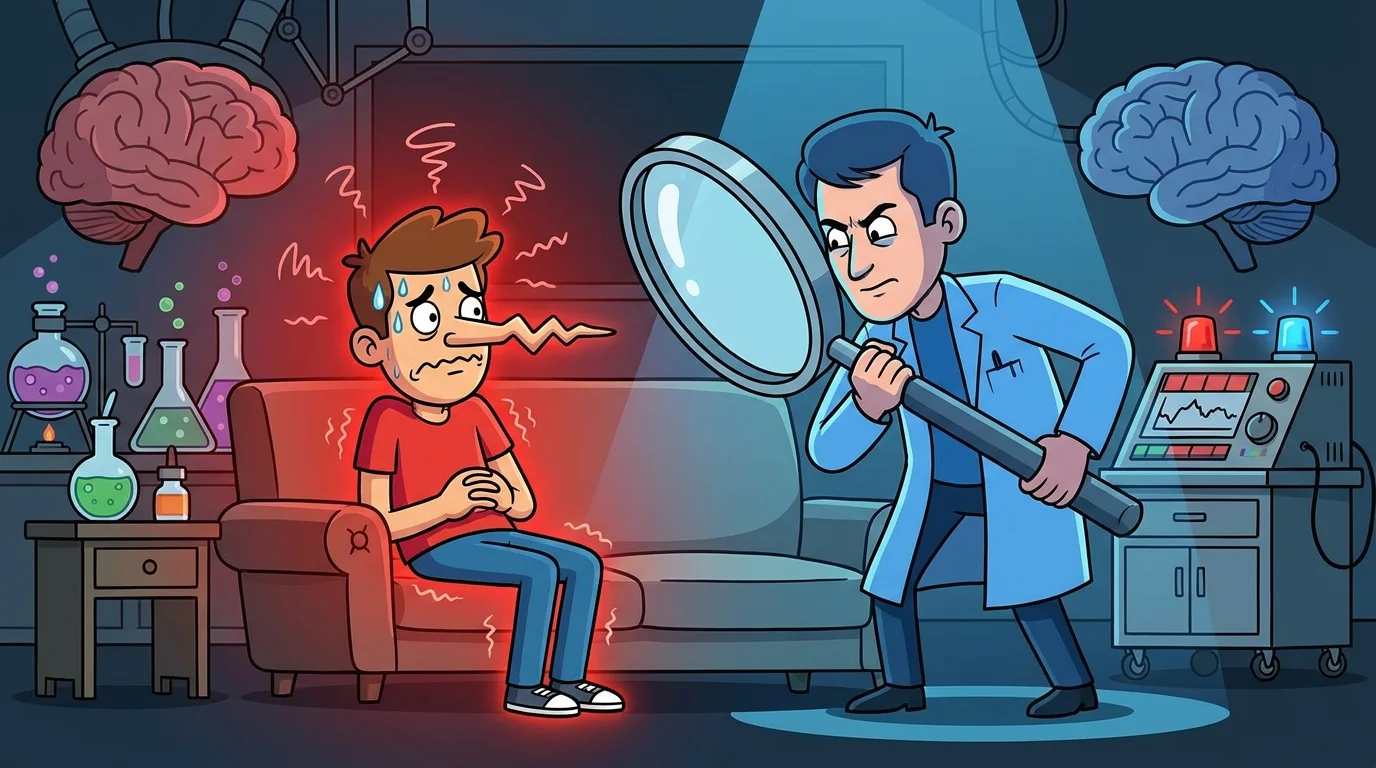
In 1966, psychologist Paul Ekman showed photographs of facial expressions to an isolated tribe with no exposure to Western culture. They matched every expression to the same emotion as people in the United States.
His conclusion: seven basic emotions produce the same facial expressions universally, across all cultures, regardless of upbringing. These expressions often appear involuntarily, in flashes lasting 1/5 of a second or less, before the conscious mind can suppress them.
He called them microexpressions.
Learning to spot them doesn't require years of training. Understanding the seven and what to look for is enough to notice them in conversation, and in your next social deduction game.
The 7 Universal Microexpressions
1. Contempt
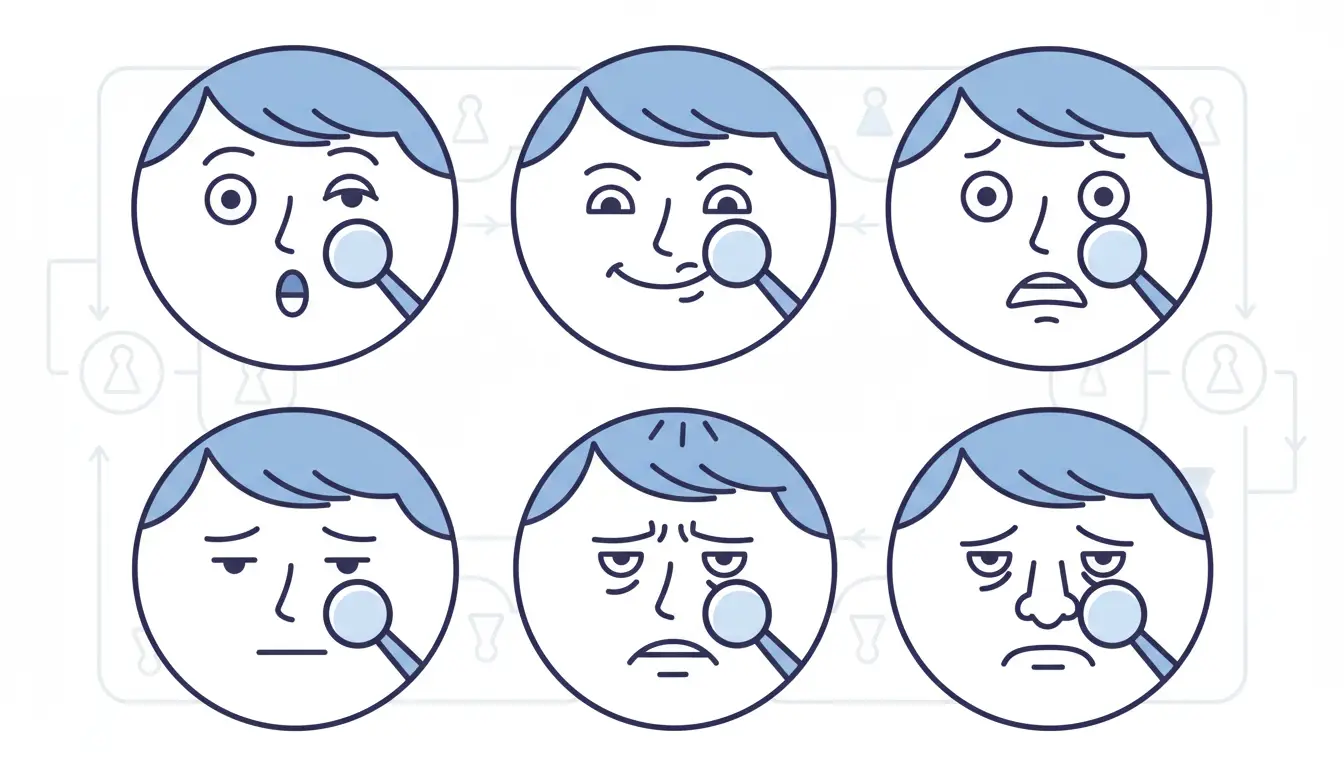
Looks like: One corner of the mouth tightens and lifts slightly, an asymmetric smirk, almost imperceptible. The only asymmetric expression in Ekman's set.
In the game: The Imposter who has successfully blended in for three rounds may flash contempt when crewmates vote incorrectly. It's involuntary, a micro-moment of "I got away with it" before their neutral face returns.
2. Disgust
Looks like: The nose wrinkles, the upper lip rises slightly, as if reacting to a bad smell.
In the game: Watch for disgust when the Imposter hears a clue that almost exposes the word. Their instinctive reaction is rejection of dangerous information, not recognition.
3. Fear
Looks like: Eyebrows raised and drawn together, upper eyelids raised, lips stretched horizontally.
In the game: During voting, genuine crewmates feel mild social discomfort. The Imposter feels actual risk. Fear microexpressions appear right before votes are cast or when someone is accused near the truth.
4. Anger
Looks like: Brows lowered and pulled together, eyelids tightened, lips pressed firmly.
In the game: Anger flashes when the Imposter feels unreasonably targeted, or when a crewmate's clue threatens to blow their cover. Brief, involuntary, usually suppressed within a second.
5. Surprise
Looks like: Eyebrows raised and curved, upper eyelids raised, jaw drops slightly.
In the game: The most useful one to watch. When the secret word is revealed and someone's surprise lasts longer than a second, it's genuine. The Imposter, who's been guessing all game, often shows briefer surprise, then quickly adjusts. The timing is off.
6. Happiness
Looks like: Outer corners of the eyes crinkle (Duchenne smile), cheeks raise, lips curl upward symmetrically.
In the game: The key is the eye crinkle. Forced smiles don't produce it. The Imposter laughing along with the group often produces a technically correct smile with no eye engagement. Once you know to look for the eyes, you can't unsee it.
7. Sadness
Looks like: Inner corners of eyebrows raise, eyelids droop, corners of lips lower.
In the game: Rare in game contexts, but appears when the Imposter realizes they've been caught before the vote. Their expression briefly breaks before they compose themselves and start deflecting.
How to Actually Spot Microexpressions in a Game
Don't watch clues, watch reactions. The best moments aren't when someone gives their clue. They're when someone else gives a clue. The Imposter reacts to clues as new information; crewmates react as confirmation of what they already know.
Watch during high-stakes moments. Microexpressions spike under stress: immediately after a very accurate clue, and right before/during voting.
Build the habit gradually. Pick one player per round and just observe their face. You're not trying to catch anything, just noticing. After a few games, anomalies become obvious.
The Limitation
Microexpressions reveal emotion, not guilt. A nervous crewmate will also show fear. Use expression reading as one input, not a verdict. Combined with linguistic tells and voting behavior, it becomes powerful.
The Imposter can control what they say. They cannot fully control what their face does.