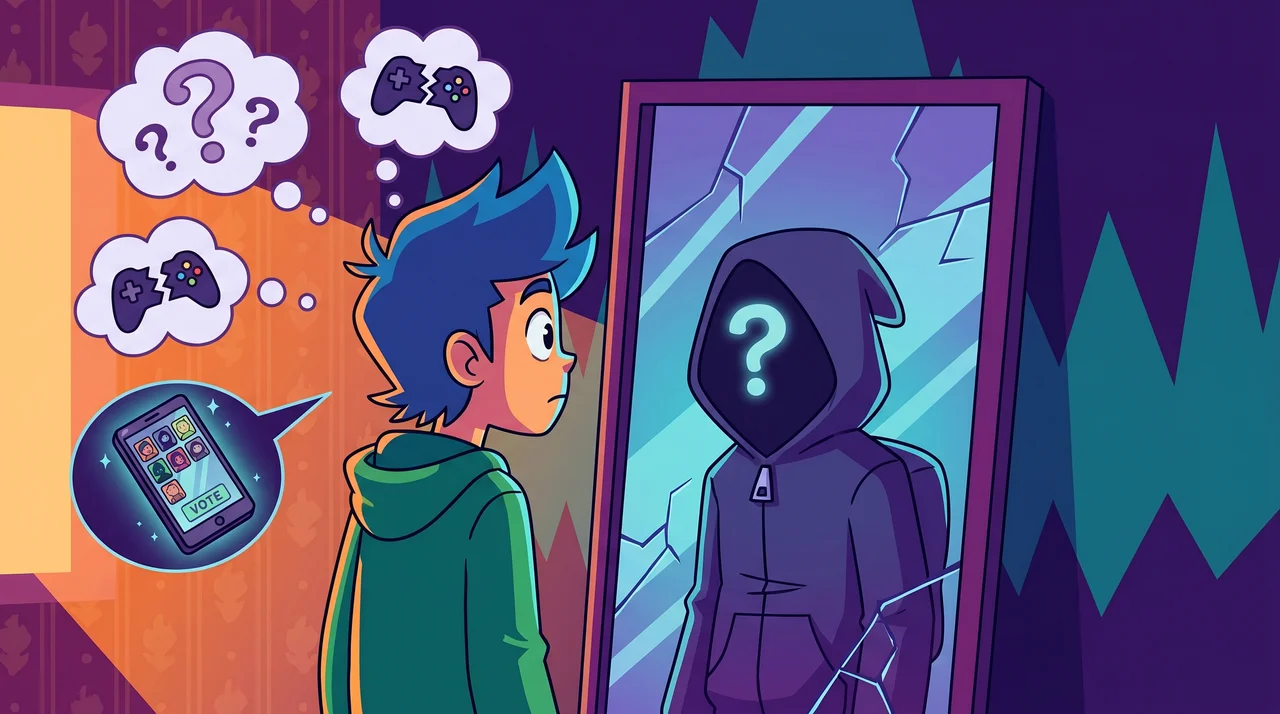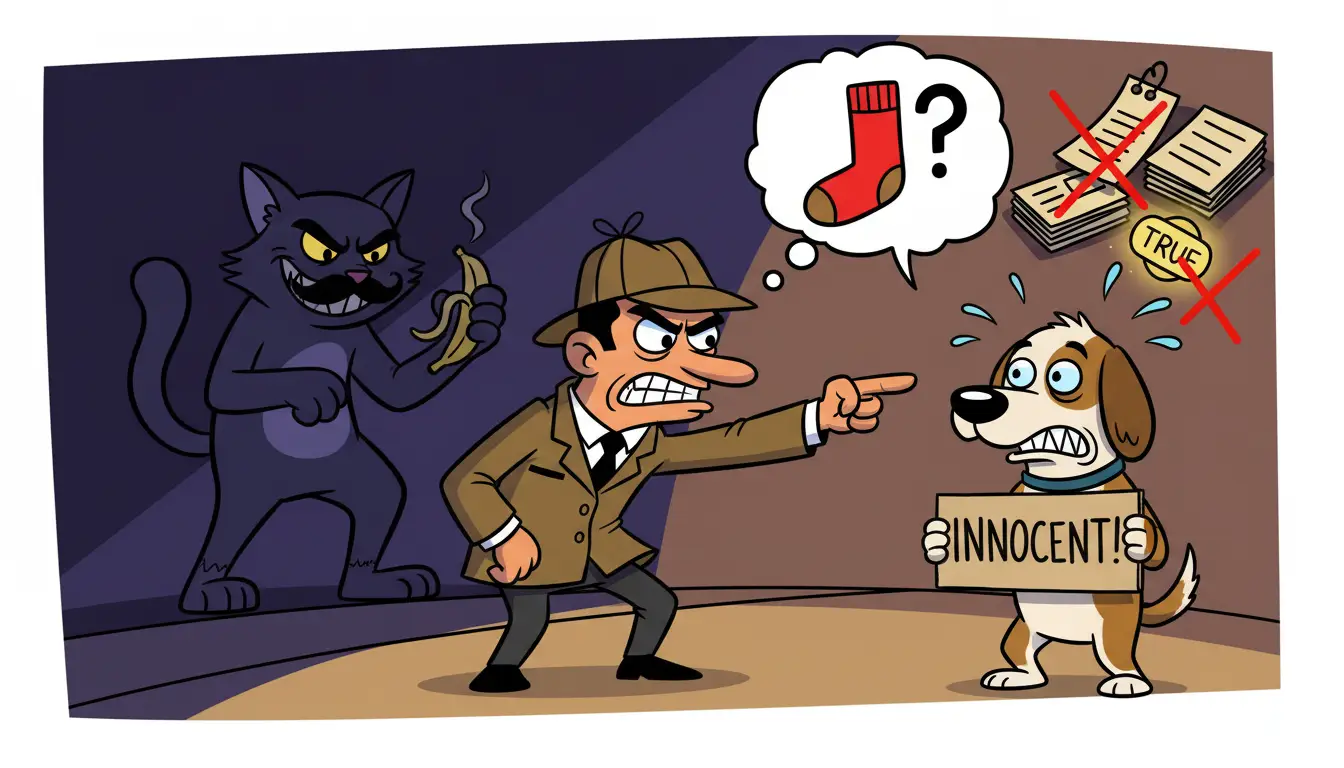
You had a feeling about them from the start. Their first clue was slightly off, nothing obvious, but something felt wrong. So you watched them. And every clue after that confirmed exactly what you already suspected.
At the vote, you argued hard. You convinced three people. They were not the Imposter.
This happens to smart, observant players constantly. And it has nothing to do with being fooled, it has to do with a cognitive shortcut your brain runs automatically, whether you want it to or not.
It's called confirmation bias.
What Confirmation Bias Is
Confirmation bias is the tendency to search for, interpret, favor, and recall information in a way that confirms what you already believe.
It's not a character flaw. It's how the brain processes information efficiently. Evaluating every piece of data neutrally from scratch is computationally expensive. The brain weights evidence that supports existing beliefs more heavily than evidence that challenges them.
Psychologist Peter Wason demonstrated this with his 2-4-6 task. Participants were shown the sequence "2, 4, 6" and told it followed a rule. They had to identify the rule by proposing their own sequences.
Most immediately guessed "even numbers increasing by two", then spent several minutes only testing sequences that confirmed that hypothesis (8-10-12, 14-16-18), never testing sequences that might disprove it.
The actual rule was simply "any ascending sequence." Confirmation bias prevented them from discovering it.
How It Plays Out in Imposter Games
Stage 1: Someone gives a slightly generic clue. You register a suspicion.
Stage 2: Your brain is primed. Subsequent clues from that person are interpreted through the lens of suspicion. Good clues are rationalized ("they're playing it smart"). Ambiguous clues become evidence.
Stage 3: By round three, you've "accumulated" five pieces of evidence, none of which would have registered without the initial suspicion.
Stage 4: You argue your case confidently. The vote goes against your suspect.
Stage 5: They're revealed as a crewmate. The actual Imposter, who you dismissed three clues ago, wins.
How the Imposter Exploits This
Skilled Impostors know how to create an early anchor on someone else. Their goal in round one isn't to give a good clue, it's to make another player seem suspicious.
"Interesting that [other player] gave that as a clue."
That's it. That's the entire play. One sentence, and confirmation bias does the rest.
How to Fight It
Use the falsification test. Instead of asking "does this evidence support my suspect?", ask "what would I expect to see if they weren't the Imposter?" Then look for that evidence. If you find it and dismiss it, you're biased.
Maintain two suspects simultaneously. Force yourself to keep at least two plausible suspects rather than converging on one early.
Notice who you stopped watching. Confirmation bias narrows attention onto your suspect. Whoever you stopped watching is statistically more likely to be the actual Imposter.
Apply skepticism to your own reasoning. If you're making a particularly compelling case, ask: "Am I sure because the evidence is strong, or because I want to be right?"
The Uncomfortable Truth
The most dangerous Imposter isn't the most convincing liar. It's the player who understood, ten rounds ago, that they don't need to deceive you directly, they just need to give your confirmation bias something to work with.