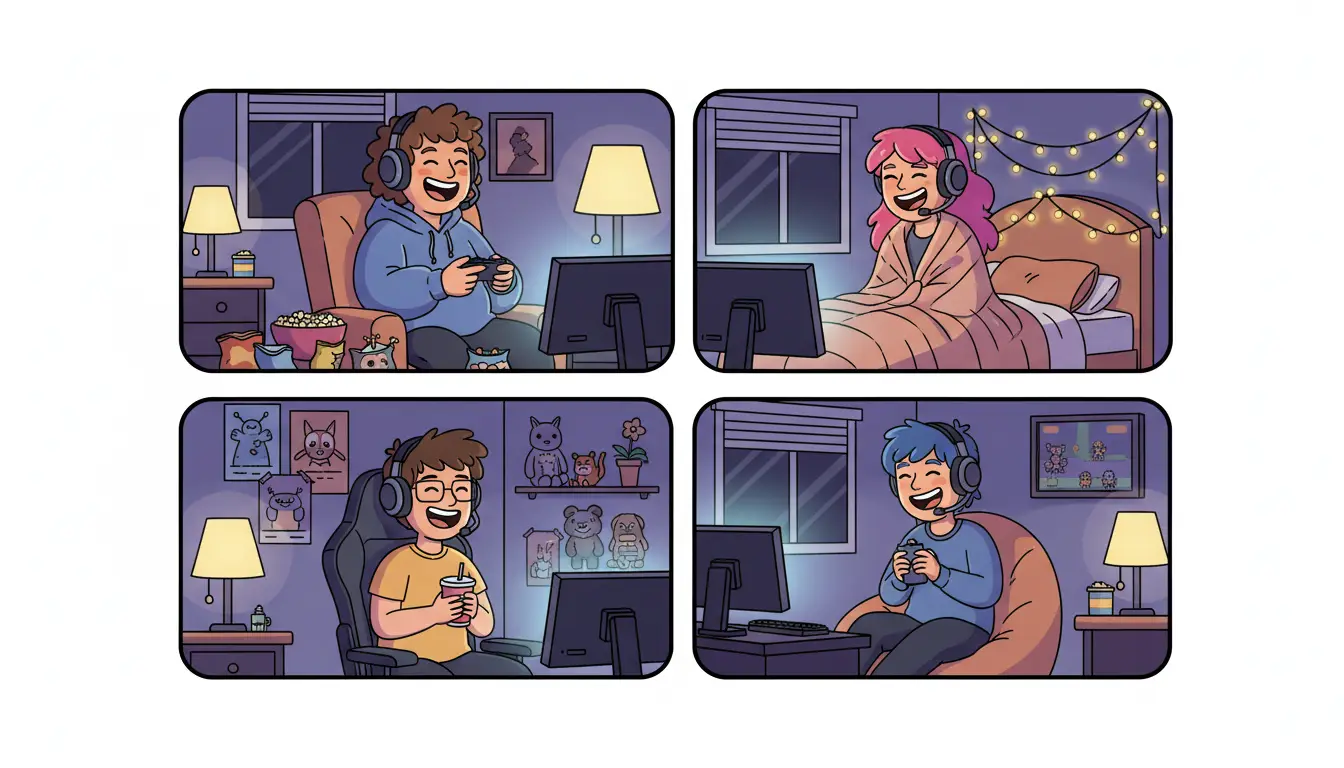
There's a server most people in their twenties are part of where the same six friends have been "hanging out" for years. Not meeting up, hanging out. The channel is called something like #general or #the-lads, and on any given evening, two or three of them are in the voice channel, talking about nothing in particular, occasionally playing something, occasionally just existing in the same digital space.
This is the new hangout. It looks different from what came before. Whether it's better or worse depends on what you were looking for from friendship in the first place.
The Ambient Presence Shift
Sociologists describe physical hangouts as having two phases: focused activity (watching something, playing a game, eating together) and ambient presence (just being in the same space without a shared activity).
Until Discord, digital communication was almost entirely focused activity: scheduled calls, messages requiring responses, gaming sessions with explicit start and end times.
Discord voice channels provide ambient digital presence. You don't need a reason to open the channel. You're just... there. Others drift in. Conversation happens or it doesn't.
For people with geographically distributed friends, which is increasingly most people after their mid-twenties, this was a qualitative shift in how friendship could function at a distance.
The Role Games Play in Discord Social Life
The most consistent reason people join a voice channel with friends is to play a game together. And the games that work best in Discord have specific properties:
- Everyone participates simultaneously, not one person playing while others watch
- Low technical requirements, not everyone has a gaming PC; browser games mean anyone can join
- Short, repeatable rounds, people can join and leave between rounds without disrupting the experience
Find the Imposter was built for exactly this context: everyone plays from their own device, rounds are 10–15 minutes, and joining mid-session requires only a room code shared in chat.
What We Gained
The comparison isn't always physical hangout vs. Discord hangout. For most people with distributed friends, it's Discord hangout vs. no hangout.
More consistent connection. The low friction of dropping into a voice channel means people stay connected with friends they'd otherwise see twice a year. The relationship stays warmer, more current.
Lower barrier to social contact. Physical hangouts require planning, coordination, travel, and energy. Discord requires picking up your phone. For people whose social energy is limited, this changes how much social contact is actually accessible.
Consistency over events. Friendships sustained by occasional events (birthdays, holidays) stay shallow. Friendships sustained by consistent ambient contact, even digital, develop more depth than the meeting frequency would suggest.
What We Lost (Honestly)
Physical presence transmits information that digital channels can't carry: the rhythm of someone's body language in a room, the physical comedy of watching someone react in real time, the shared environmental context of being in the same place.
Friendships sustained entirely through Discord can develop a kind of flatness, relationships that feel warm during the session but somehow ephemeral. The feeling of knowing someone well despite being unable to picture exactly how they'd behave in a room.
There's also the self-selection problem: friends who aren't on Discord, or who find voice channels awkward, drift out of the group's social orbit through the accumulated cost of absence from the default gathering place.
The New Normal
For the generation that grew up with smartphones, the distinction between "online friends" and "real friends" has mostly dissolved. The people you play games with on Discord, talk to daily in voice channels, and see twice a year in person are simply your friends, the platform is irrelevant.
The social architecture is different. The quality of connection is different. Whether it's better depends on what you're measuring.
But the hangout? It's still happening. It just looks like a voice channel, a shared room code, and six people accusing each other of being the Imposter.